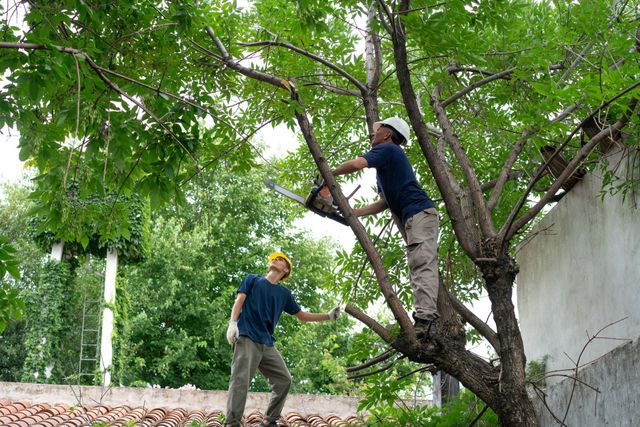
I have spent years working on residential tree crews, usually on properties where large hardwoods sit close to roofs, fences, sheds, and utility lines. Most homeowners call after noticing a dead limb, a leaning trunk, or branches rubbing against shingles, but the real work starts before a saw ever touches wood. I have learned that a careful inspection and a practical plan matter just as much as climbing ability. Tree work gets expensive fast when those first decisions are rushed.
I Start by Reading the Tree and the Property
My first walk around a property usually takes about 15 minutes, though complicated jobs can take much longer. I look at the trunk flare, major unions, deadwood, nearby targets, access for equipment, and the direction each large limb naturally wants to move. I also check the ground because soft soil, retaining walls, septic areas, and narrow gates can completely change how I approach a job. Access matters more than people expect.
I remember a homeowner last spring who assumed a maple needed to come down because one side looked thin and several branches had died back. After looking more closely, I found that much of the concern came from one damaged scaffold limb rather than obvious failure across the whole tree. We were able to discuss targeted pruning instead of immediately treating removal as the only option. That kind of evaluation can save a healthy tree and reduce unnecessary disruption around the yard.
Distance also changes the plan. A limb hanging 6 feet above an open lawn is a very different problem from a similar limb hanging 6 feet above a glass sunroom. I measure clearances visually and sometimes physically before setting ropes because a small mistake near a structure can become an expensive repair. The tree may be the same size, but the working environment determines much of the risk.
Good Tree Service Depends on Planning Before Cutting
I pay close attention to how a tree company talks about the job before agreeing with its proposed approach. A crew should be able to explain where material will be lowered, how lawn damage will be limited, and what happens if hidden decay changes the plan once cutting begins. Property owners comparing local options may come across Wayne’s Tree Service while researching professional help for pruning, removal, or other tree-related work. I always suggest looking beyond a company name and focusing on how clearly the crew explains the work in front of them.
On larger removals, I often spend more time planning the drop zone than making the first cut. A mature tree can send several thousand pounds of wood through a surprisingly small section of yard, especially once trunk pieces start coming down. If there is only a 10-foot working area between a house and a fence, rigging choices become much more important. That is where experience shows.
I have worked on jobs where the easiest-looking limb became the hardest part because a cable line, ornamental tree, or narrow driveway limited our normal options. We sometimes lower sections one piece at a time instead of allowing them to fall freely. That approach takes longer, yet it gives me far more control over where the wood lands. Controlled work usually looks slower from the ground.
Pruning Should Have a Clear Reason
I do not like removing branches simply because a tree looks crowded. Before making a pruning cut, I want a reason such as removing deadwood, improving clearance, reducing a poorly attached limb, or addressing branches interfering with a structure. Taking too much live canopy in one visit can leave a tree stressed and visually awkward. Less can be enough.
One homeowner I worked with had a row of mature trees beside a two-story house, and the original request was to cut every branch back several feet. After walking the property, I suggested concentrating on the limbs touching the roof and several damaged branches higher in the canopy. We kept much more of the natural crown while creating the clearance the owner actually needed. The finished trees still looked like trees instead of tall trunks with shortened ends.
Cut placement matters too. I try to work just outside the branch collar rather than cutting flush against the trunk, and I avoid leaving long stubs where possible. On a 3-inch limb, a poorly placed cut can be far more noticeable than someone expects once the canopy opens up. Clean work begins with small decisions.
Tree Removal Is Usually About Control
People sometimes imagine tree removal as dropping an entire tree in one dramatic cut, but that is uncommon on the residential properties where I work. Houses, neighboring yards, parked vehicles, overhead wires, and landscaping often leave very little open space. I may dismantle a tree from the top downward in sections, using ropes and rigging to manage pieces that cannot safely fall. A 20-foot limb can cause serious property damage if its swing is misjudged.
I once worked on a backyard removal where the tree stood behind a detached garage and the only usable gate was around 4 feet wide. Large equipment could not simply drive beside the trunk, so every section had to be handled with the limited access in mind. The cutting itself was straightforward, but moving branches and rounds to the truck required much of the day. Homeowners often notice the saw work while overlooking the logistics around it.
Dead trees create a different challenge. Wood that appears solid from below can be brittle higher in the crown, and old cavities can affect where a climber or rigging point can safely be positioned. I change my approach when I see loose bark, fungal growth, hollow areas, or extensive deadwood. Sometimes that means bringing in different equipment rather than climbing the tree.
Cleanup Is Part of the Job I Notice Most
A yard can look worse after professional tree work if cleanup is treated as an afterthought. On my crews, I think about debris movement before cutting because dragging heavy branches across a wet lawn can leave marks that remain after the tree itself is gone. Plywood, smaller loads, and careful equipment routes can reduce that damage. Twenty extra minutes of preparation can save a lot of frustration.
Small branches also create more material than homeowners expect. Removing just 4 or 5 substantial limbs from a mature tree can produce a large pile once every twig reaches the ground. Chipping makes the volume easier to handle, while larger trunk sections may need to be cut into movable rounds. If firewood is staying on site, I prefer to know that before cleanup starts.
Stumps deserve a separate conversation. Cutting a trunk low does not mean the stump disappears, and stump grinding may be handled as another part of the job. I ask where irrigation lines, landscape lighting, or underground features might be before grinding begins. Even a familiar yard can hide surprises under a few inches of soil.
Storm Damage Changes the Normal Routine
Storm work has taught me to distrust appearances. A broken limb can remain suspended by a strip of wood, another branch, or nearby wires, and it may shift once wind pressure changes or a supporting branch is touched. I inspect from more than one angle before anyone starts cutting. Five minutes can change the whole plan.
After one heavy storm season, I visited a property where a large limb had split over a driveway but had not reached the ground. From the street it looked like an easy cut, yet the upper section was resting against another limb and storing tension like a bent spring. We repositioned the work area and lowered the damaged section instead of cutting from directly beneath it. That decision made the job slower but far more predictable.
I also tell homeowners to keep distance from obviously damaged trees until they can be assessed. Hanging limbs can shift without warning, especially after rain or additional wind. Moving cars and keeping people away from the immediate drop area are simple precautions. Emergency work still needs planning.
I Pay Attention to the Small Signs of a Professional Crew
Equipment condition tells me a lot. I notice whether ropes are organized, saws are maintained, protective gear is actually worn, and workers communicate before a cut begins. A crew handling a 40-foot tree beside a house cannot depend on guessing what another person intends to do. Clear communication should be obvious from the ground.
I also value realistic conversations about what tree work will leave behind. Heavy equipment may create light impressions in soft turf, sawdust will appear around cutting areas, and a freshly removed tree can change shade across an entire side of a property. A good discussion should cover those practical details rather than pretending the process leaves no trace. I prefer expectations that match the actual job.
Price matters, but I do not judge a tree service on price alone. Two estimates can describe very different scopes even if both simply say “tree removal,” especially when one includes hauling, cleanup, stump work, or difficult rigging. I compare what is actually being done before comparing the final number. That prevents many misunderstandings later.
The Best Tree Work Often Looks Uneventful
Some of my favorite jobs are the ones homeowners barely remember because nothing dramatic happened. The crew arrived, protected the work area, removed or pruned the tree, cleared the debris, and left the property looking orderly. That calm result usually comes from dozens of quiet decisions made before and during the work. Good tree work should feel controlled.
I still approach each property as its own problem rather than assuming a method that worked yesterday will fit today. A 50-foot oak beside an open field gives me choices that the same tree beside a pool, fence, and garage would never allow. Tree species, condition, access, weather, and nearby structures all influence the plan. Experience helps me recognize those differences before they create trouble.
If I were hiring someone for my own property, I would choose the crew that can explain its plan in plain language and answer practical questions about access, rigging, cleanup, and the condition of the tree. I would rather hear a cautious answer than an unrealistic promise about how simple a difficult removal will be. Trees are heavy, properties are valuable, and thoughtful preparation is usually what separates controlled work from a costly surprise.